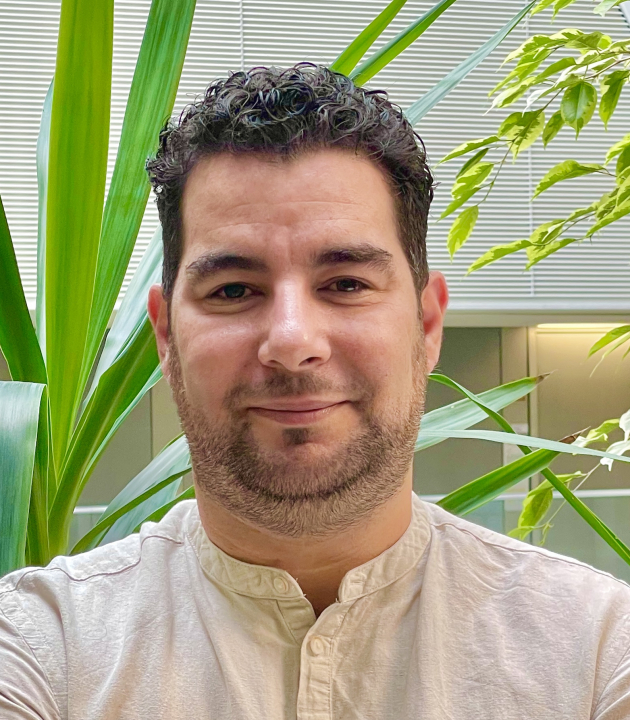
Skander Hathroubi
Biofilm & Antimicrobial Coatings Expert R&D Microbiology | Wound Care | Biomaterials | Medical Materials | Helping Translate Antimicrobial Science into Credible Anti-Biofilm Evidence |
Biofilm microbiology
Antimicrobial coatings, biomaterials and hydrogels
Wound-care materials
Antimicrobial peptides
Scientific writing, patents, and project leadership
41 years old
France
Employed
Open to opportunities
I am a Senior R&D Scientist and Project Leader specialized in biofilm microbiology, antimicrobial coatings, wound-care materials, biomaterials, antimicrobial peptides, and delivery systems. My work focuses on translating microbiology, surface science, and biomaterials into credible biological evidence for medical materials and product development. I help design and interpret antimicrobial and anti-biofilm testing strategies, including bacterial adhesion, biofilm models, coating validation, cytotoxicity, leaching, accelerated aging, and product-relevant biological performance.


Senior R&D Scientist & Project Leader — Microbiology, Biofilm & Antimicrobial Coatings
Spartha Medical
Since July 2022
Full-time
Strasbourg
France

- Leading microbiology R&D projects focused on antimicrobial and anti-biofilm strategies for medical materials, wound care, biomaterials, coatings, antimicrobial peptides, hydrogels, and delivery systems
- Designed product-relevant antimicrobial and biofilm testing workflows for coated materials and wound-care applications
- Supported development of antimicrobial coatings active against Gram-positive, Gram-negative, and resistant bacterial strains
- Contributed to patent applications, peer-reviewed publications, and translational R&D programs in antimicrobial biomaterials
- Managed collaborations between microbiology, materials science, product development, and external partners
Senior Research Associate and project leader
Humboldt-Universität zu Berlin
August 2019
to June 2022
Berlin
Germany

- Research focused on Escherichia coli macrocolony biofilms, bacterial cellulose production, curli fibers, and biofilm architecture within the interdisciplinary Cluster of Excellence “Matters of Activity”
- Project leader for bacterial cellulose research at the interface of microbiology, biomaterials, architecture, textile fermentation, and design. The work included collaborations on biofilm-derived materials, textile microbiomes, exhibitions, and book contributions.
- Textile fermentation_Biofilm and textile microbiome. Collaboration with the anthropology expert Dr. Laurence Douny
- “La récolte des biofilms” exhibition at the Humboldt Labor at Humboldt Forum_2021 Active Curtain.« Humboldt Labor, Humboldt Forum Berlin. Since 29 April 2021.
https://www.humboldt-labor.de/en/projects/clusters-of-excellence/active-curtain-project
"DAOULA sheen". West African Wild Silk on Its Way. Exhibition at the Tieranatomisches Theater Berlin Germany and Ouagadougou-Safané, Burkina Faso. 17 November 2022 - 31 December 2022.
https://tieranatomisches-theater.de/project/ausstellung-ab-17-november-2022daoula-sheenwest-african-wild-silk-on-its-way/
"Bacterial Cellulose: Co-Weaving Biofilms"
An Installation for the Triennale XXIII: » An Introduction to Mysteries« in the thematic exhibition »Alchemic Laboratory«, curated by Ingrid Paoletti, from July 15th to December 11th, 2022
https://www.matters-of-activity.de/en/activities/8617/bacterial-cellulose-co-weaving-biofilms - Book contribution:
- B. Beyer and S. Hathroubi. La récolte des biofilms. In: MàJ : design, environnements techniques & pratiques exploratoires. Éditions Cité du design. École supérieure d’art et design Saint-Étienne (ESADSE)/Cité du design, France. 2021
- B. Beyer, S. Hathroubi and R Hengge Bacterial Loom. In: Architectures of Weaving From Fibers and Yarns to Scaffolds and Skins. Christiane Sauer / Mareike Stoll / Ebba Fransén Waldhör / Maxie Schneider (eds.) Jovis ISBN 978-3-86859-739-4
- L. Douny, S. Hathroubi, A. Dialo, A. Séré, S. Sawadogo and R. Hengge. West African “fermented” textiles. Submitted to Bloomsbury Encyclopedia of World Textiles
- B. Beyer and S. Hathroubi. La récolte des biofilms. In: MàJ : design, environnements techniques & pratiques exploratoires. Éditions Cité du design. École supérieure d’art et design Saint-Étienne (ESADSE)/Cité du design, France. 2021
Postdoctoral researcher
University of California, Santa Cruz
November 2016
to June 2019

- Postdoctoral research focused on Helicobacter pylori biofilm formation and its potential contribution to bacterial persistence, antibiotic tolerance, and pathogenesis.
- The work combined transcriptomic, genetic, imaging, and infection-model approaches to identify genes and pathways involved in H. pylori biofilm development on abiotic and biotic surfaces. Experimental approaches included mutant characterization, RNA-seq/transcriptomic analysis, mouse models of H. pylori infection, confocal scanning laser microscopy (CSLM), and scanning electron microscopy (SEM) to study biofilm structure, composition, and in vivo behavior.
- Selected publications:
• Hathroubi et al., 2018 — Helicobacter pylori biofilm formation and its potential role in pathogenesis. Microbiology and Molecular Biology Reviews.
• Hathroubi, Zerebinski & Ottemann, 2018 — Helicobacter pylori biofilm involves a multigene stress-biased response, including a structural role for flagella. mBio.
• Hathroubi, Hu & Ottemann, 2020 — Genetic requirements and transcriptomics of Helicobacter pylori biofilm formation on abiotic and biotic surfaces. npj Biofilms and Microbiomes.
• Hathroubi, Zerebinski, Clarke & Ottemann, 2020 — Helicobacter pylori biofilm confers antibiotic tolerance in part via a protein-dependent mechanism. Antibiotics.
• Tachiyama et al., 2022 — The flagellar motor protein FliL forms a scaffold of circumferentially aligned subunits essential for torque generation in Helicobacter pylori. PNAS.
• Elshenawi et al., 2025 — Genetic basis of gap formation between migrating Helicobacter pylori colonies in soft agar assays. Microorganisms.
Teaching experiences
University of California Santa Cruz _UdeMontreal_HU Berlin_University of Strasbourg
Since May 2018
- Teaching experience in biofilm biology, microbiology, molecular microbiology, bacterial pathogenesis, microbial envelope structures, and practical microbiology for undergraduate, Master’s, and professional students at the University of Strasbourg, Humboldt-Universität zu Berlin, University of California Santa Cruz, and Université de Montréal.
PhD in Veterinary Science, Microbiology and Infectious Disease
Faculté de médecine vétérinaire, Université de Montréal
May 2011
to September 2016
Ph.D. research focused on bacterial biofilms in their natural and host-associated environments, with emphasis on Actinobacillus pleuropneumoniae biofilm formation, antibiotic tolerance, immune response, and phenotypic adaptation within biofilm communities.
The work included development and optimization of bacterial biofilm culture methods, characterization of biofilm mutants, analysis of surface polysaccharide contribution to biofilm formation, and evaluation of antibiotic effects on biofilm development.
GPA: 3.85/4.3
Selected publications from Ph.D. work:
• Hathroubi et al., 2017 — Actinobacillus pleuropneumoniae: role of biofilm in pathogenicity and potential impact for vaccine development. Animal Health Research Reviews.
• Hathroubi et al., 2016 — Biofilms: bacterial shelters against antibiotics. Microbial Drug Resistance.
• Hathroubi et al., 2016 — Actinobacillus pleuropneumoniae biofilms induce a lower response in porcine alveolar macrophages. Innate Immunity.
• Hathroubi et al., 2015 — Surface polysaccharide mutants reveal that absence of O antigen reduces biofilm formation of Actinobacillus pleuropneumoniae. Infection and Immunity.
• Hathroubi et al., 2015 — Sub-inhibitory concentrations of penicillin G induce biofilm formation by field isolates of Actinobacillus pleuropneumoniae. Veterinary Microbiology.
The work included development and optimization of bacterial biofilm culture methods, characterization of biofilm mutants, analysis of surface polysaccharide contribution to biofilm formation, and evaluation of antibiotic effects on biofilm development.
GPA: 3.85/4.3
Selected publications from Ph.D. work:
• Hathroubi et al., 2017 — Actinobacillus pleuropneumoniae: role of biofilm in pathogenicity and potential impact for vaccine development. Animal Health Research Reviews.
• Hathroubi et al., 2016 — Biofilms: bacterial shelters against antibiotics. Microbial Drug Resistance.
• Hathroubi et al., 2016 — Actinobacillus pleuropneumoniae biofilms induce a lower response in porcine alveolar macrophages. Innate Immunity.
• Hathroubi et al., 2015 — Surface polysaccharide mutants reveal that absence of O antigen reduces biofilm formation of Actinobacillus pleuropneumoniae. Infection and Immunity.
• Hathroubi et al., 2015 — Sub-inhibitory concentrations of penicillin G induce biofilm formation by field isolates of Actinobacillus pleuropneumoniae. Veterinary Microbiology.
Certificate '' Bacteria biofilms in chronic infections''
Faculty of Health Sciences, University of Copenhagen
September 2012
to November 2012
Training on bacterial biofilms in chronic infections, including differences between planktonic and biofilm-associated bacteria, medical relevance of biofilms, healthcare-associated infection challenges, biofilm model design, and future research strategies.
Master Applied Microbiology, Environment and Health
Université Pierre Et Marie Curie, Paris 6, France
September 2008
to June 2010
Training in microbiology, bacteriology, virology, parasitology, environmental quality, and public health. Research project on genotypic and phenotypic characterization of biofilm production in Pseudomonas aeruginosa strains from the Bone Marrow Transplant Center of Tunis. Additional training in microbial biodiversity and biotechnology at the Oceanological Observatory of Banyuls-sur-Mer.
Bachelor of Life Sciences
Université Pierre et Marie Curie, Paris 6 France
September 2005
to June 2008
Broad training in life sciences, covering animal and plant biology, organismal physiology, cellular and molecular biology, genetics, ecology, and integrated biological systems.
- Photography; photo treatment Photoshop, ACDSee
- Road trips (USA, Canada, Europe) > 200,000 km and 36 visited countries (3 continents)
- Visual communication, newsletters and Kids science books
- Biofilm testing strategy, bacterial adhesion, anti-biofilm claims, antimicrobial susceptibility, assay design, strain selection, controls, endpoints, and log-reduction interpretation.
- Coating validation, wound-care materials, hydrogels, antimicrobial peptides, non-leaching systems, stability, accelerated aging, leaching, and biological performance.
- Microbiological support for wound dressings, textiles, biomaterials, and medical-device surfaces, focusing on contamination control, biofilm risk, and infection-inhibiting strategies.
- Cell culture, cytotoxicity interpretation, macrophage response, cytokine analysis, and cell–material interaction assessment.
- Experimental design, data interpretation, scientific reporting, claims review, grant writing, project leadership, and antimicrobial technology assessment.